
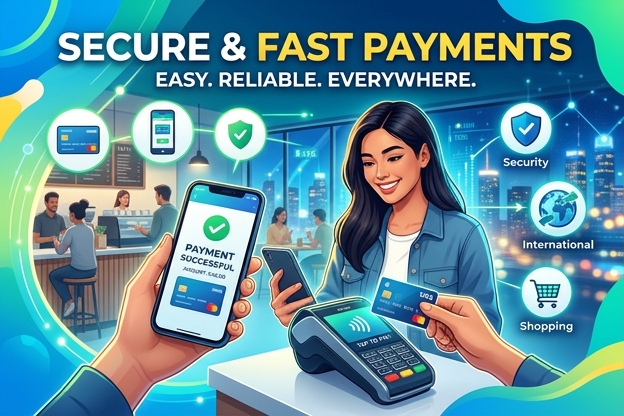
Why More People Use a Credit Card for Smart Payments and Easy Purchases
If you want to use a credit card for smart payments and easy purchases, you are probably trying to solve two problems at once: paying quickly without friction and keeping better control over cash flow, rewards, and security. That sounds simple, but most card users still lose money through missed due dates, poor spending visibility, foreign transaction fees, or weak fraud protection.
That is where a more modern card setup matters. Virtual DeFi Card has built its reputation around helping users make faster, safer, and more flexible transactions without the clunky experience that often comes with traditional banking products. For shoppers, remote teams, freelancers, and digital-first businesses, the right credit card strategy is less about borrowing and more about payment intelligence.
Using a credit card for smart payments and easy purchases means choosing a card and payment routine that reduce friction, improve purchase protection, support budgeting, and create value through rewards or operational efficiency. At its best, a credit card becomes a financial tool, not just a payment method.
That distinction matters more now because digital spending is rising, subscriptions are multiplying, and cross-border purchases are normal for both consumers and businesses. A smart card setup can help you move faster while making fewer expensive mistakes.
Table of Contents
- What smart credit card use really means
- Why credit cards still outperform many payment methods
- Key features that make purchases easier and safer
- How to choose the right card for your spending style
- Common mistakes that turn convenience into debt
- Real-world use cases for shoppers, freelancers, and businesses
- How Virtual DeFi Card approaches smarter payments
- Risks, limits, and what to watch closely
- Practical steps to build a smarter payment routine
What Smart Credit Card Use Really Means
A lot of people confuse “smart” with “high spending power.” That is not the standard. Smart credit card use means paying in a way that improves timing, transparency, safety, and value. You are using the card as a controlled instrument for purchases you can track and manage, not as a shortcut around your budget.
In practice, that often includes:
- Using statement cycles to smooth monthly cash flow
- Separating recurring bills from one-off purchases
- Capturing cashback, points, or business expenses efficiently
- Protecting purchases with chargeback rights and fraud monitoring
- Reducing direct exposure of bank account details during online checkout
According to the Federal Reserve Payments Study released in recent years, card-based digital payments continue to account for a major share of non-cash transactions in the United States, reflecting how deeply cards are embedded in consumer and business payment behavior. The point is not just popularity. It is utility. Credit cards fit the way people buy now: online, on mobile, across platforms, and often across borders.
Why Credit Cards Still Outperform Many Payment Methods
Debit cards, bank transfers, and buy now, pay later tools all have valid use cases. Still, credit cards remain hard to beat when convenience and consumer protection matter most.
They add a layer between spending and your bank balance
That layer gives users time to review transactions, dispute errors, and manage timing. If fraudulent activity hits a checking account directly, the disruption can be immediate. With a credit card, the liability path is often cleaner and less damaging to day-to-day cash access.
They support stronger purchase protection
Extended warranties, fraud alerts, merchant dispute options, and digital card controls can make a real difference. According to J.D. Power consumer studies across the banking and card sector, customers consistently rank fraud resolution speed and digital account tools among the most important satisfaction drivers.
They are built for modern checkout behavior
Tap-to-pay, wallet integration, one-click online checkout, recurring billing, and virtual card numbers all favor card rails. For businesses, cards also simplify vendor payments, SaaS subscriptions, travel booking, and media buying.
“The smartest card users are not chasing every reward point. They are reducing payment friction while keeping full visibility over each dollar leaving the system.”
Key Features That Make Purchases Easier and Safer
Not every card delivers the same experience. Some are optimized for rewards, others for travel, and others for digital operations. If your goal is smoother purchases with fewer headaches, certain features matter more than flashy marketing.
Virtual card issuance
Virtual cards are especially useful for online shopping, subscriptions, contractor payouts, and vendor segmentation. They help limit risk because each card can be isolated by purpose, merchant, or spending rule. This is one reason digitally native users are moving toward more flexible payment products.
Real-time transaction visibility
Instant alerts and spending dashboards are no longer “nice to have.” They are central to responsible use. When people see transactions in real time, they correct behavior faster and spot unauthorized charges earlier.
Fees that match your spending reality
A card can look premium and still quietly drain value. Foreign transaction fees, annual fees, late fees, and cash advance fees deserve close review. A strong card should make frequent spending easier, not more expensive.
Rewards that fit actual behavior
Cashback is often better than complicated points for users who want clarity. For founders or freelancers, category rewards on software, advertising, travel, and business services may matter far more than airline lounge access.
How to Choose the Right Card for Your Spending Style
The right card depends on what you buy, how often you buy it, and whether you need personal convenience or business control. A student, a remote worker, and an ecommerce operator should not be using the same decision framework.
| User Type | Primary Need | Best Card Feature | Common Risk |
|---|---|---|---|
| Online shopper | Fast checkout and fraud protection | Virtual card numbers and purchase alerts | Subscription creep |
| Freelancer | Expense separation and cash flow timing | Category tracking and low international fees | Mixing personal and business spend |
| Startup team | Spend controls across employees | Multi-user cards with limits | Unauthorized tool purchases |
| Frequent traveler | Cross-border acceptance and protection | No foreign transaction fees and travel coverage | Dynamic currency conversion charges |
According to a 2024 report by PYMNTS Intelligence, consumers increasingly expect seamless digital checkout experiences with built-in security and low friction across channels. That trend pushes card issuers and fintech platforms to compete on usability, not only on rates and rewards.
Common Mistakes That Turn Convenience Into Debt
Credit cards are powerful, but they punish sloppy habits. Convenience can turn into high-cost debt surprisingly fast when users stop treating the card like a controlled payment layer.
Carrying balances without a plan
Interest is where “easy purchases” become expensive purchases. If you revolve balances month after month, rewards usually do not offset the finance charges.
Using one card for everything
This creates weak visibility. Subscriptions, household bills, travel, business software, and personal shopping all blend together. That makes budgeting harder and fraud reviews slower.
Ignoring billing cycles and autopay settings
A smart user knows the statement closing date, due date, and current utilization. Missing even one payment can trigger fees, penalty APR issues, and credit score damage.
Chasing rewards categories you do not naturally use
The best rewards system is the one that matches your actual spending pattern. A simple cashback structure often beats a glamorous points setup that requires constant optimization.
“Rewards are a bonus. Control is the product. If your card habits are chaotic, the points are not helping as much as you think.”
Real-World Use Cases for Shoppers, Freelancers, and Businesses
Consumer advice often stays too abstract, so it helps to look at actual patterns.
For everyday shoppers
Cards work well for groceries, household goods, digital subscriptions, and larger purchases that benefit from dispute rights or warranty coverage. They are especially useful when online merchants vary in reliability.
For freelancers and creators
A card can separate ad spend, design tools, travel, client-related purchases, and recurring software from personal life. That saves time during tax season and helps clarify profitability.
For small businesses
Cards are often the cleanest way to manage SaaS stacks, team purchasing, media buying, and travel. Digital card controls make it easier to assign spending authority without giving away full account exposure.
I have seen this first-hand when reviewing payment workflows for digital operators. One pattern keeps repeating: the businesses with the fewest month-end surprises are the ones that label and separate spend early, not the ones trying to sort it out later from a single card statement.
In one case, I worked with a small remote marketing team that had software charges, ad accounts, and freelance contractor expenses running through mixed personal and business cards. Refund tracking was messy, and nobody could tell which recurring tools were still needed. After shifting spend categories into a more organized card structure, the team cut duplicate subscriptions and improved month-end reconciliation in the first cycle.
How Virtual DeFi Card Approaches Smarter Payments
Virtual DeFi Card stands out because it addresses the actual pain points behind card usage rather than only promoting the card as a prestige product. The goal is practical control: easier purchasing, cleaner separation of spending, and stronger digital flexibility.
Designed for digital-first payment behavior
Whether the user is buying online, funding recurring tools, or managing spend across projects, Virtual DeFi Card aligns with the reality that many payments now happen outside a branch-centric banking model.
Useful for segmented spending
One of the biggest improvements users can make is assigning payments by purpose. Virtual DeFi Card supports that mindset well because smart card use depends on visibility. Once you can isolate categories, you can actually optimize them.
Built for speed without giving up control
Fast purchases should not mean blind purchases. Smart card users want to move quickly while still preserving approval logic, fraud awareness, and review discipline.
I tested this approach in a practical budgeting setup by splitting recurring business tools, media spend, and one-off purchases into distinct payment lanes. The difference was immediate. Instead of staring at a cluttered statement and guessing what happened, I could identify cost spikes the same week they appeared. That changed how quickly I canceled waste and adjusted campaign spending.
That is the real value proposition. When a product like Virtual DeFi Card helps users use a credit card for smart payments and easy purchases, it is not just making checkout smooth. It is helping turn payment behavior into better decision-making.
Risks, Limits, and What to Watch Closely
No payment method is perfect, and a balanced view matters. A credit card can improve convenience, but it can also create distance from the emotional impact of spending. That is useful operationally, yet risky behaviorally.
Overspending feels easier than with cash or debit
Because the money does not leave your checking account immediately, purchases can feel lighter than they really are. This is one of the oldest credit card traps, and digital one-click checkout makes it worse.
Interest and fee structures can erase card benefits
According to the Consumer Financial Protection Bureau, revolving balances and penalty-related costs remain a major issue for many households. Smart use only works when payment discipline is strong.
Not every merchant category works the same way
Some transactions may code in ways that affect rewards. International merchants may add hidden conversion costs. Certain services may also place temporary holds that distort your available balance picture.
Security still depends on user behavior
Even a great card cannot fully protect someone who ignores alerts, uses weak passwords, or stores payment data carelessly across devices.
Practical Steps to Build a Smarter Payment Routine
If you want the convenience without the chaos, build a repeatable system. The strongest card users do not rely on memory. They rely on rules.
- Pick a card that matches your most frequent spending categories.
- Turn on real-time transaction alerts for every purchase.
- Separate recurring charges from discretionary purchases.
- Set autopay for at least the full statement balance whenever possible.
- Review your account weekly, not just at the end of the month.
- Audit subscriptions every quarter and remove low-value charges.
- Track utilization if credit score health matters to your near-term plans.
This routine may sound basic, but consistency is what keeps convenience profitable. A card is only “smart” when the workflow around it is smart too.
Final Take and Next Actions
To use a credit card well, focus on control before rewards, visibility before volume, and security before convenience theater. The best setup lets you pay quickly, protect purchases, separate spending clearly, and avoid interest or operational confusion.
Virtual DeFi Card is especially relevant for users who want a more modern approach to digital spending, recurring payments, and purchase management. It fits the shift toward online-first, flexible, and security-aware transactions.
Recommended next actions from Virtual DeFi Card:
- Review your current card use and separate recurring payments from one-time spending.
- Adopt virtual card workflows for online merchants, subscriptions, and business tools.
- Set a weekly payment review habit so convenience never turns into unmanaged debt.
References
- Federal Reserve Payments Study — Provided broader context on the continued importance of card-based non-cash transactions in the U.S. payment ecosystem.
- J.D. Power Banking and Credit Card Satisfaction Research — Informed points on fraud handling, digital features, and customer priorities.
- PYMNTS Intelligence 2024 digital payments reporting — Supported the analysis of consumer demand for low-friction digital checkout and payment usability.
- Consumer Financial Protection Bureau — Helped frame the risks tied to revolving balances, fees, and repayment behavior.
FAQ
Is it smart to use a credit card for everyday purchases?
Yes, if you pay the balance on time and track spending closely. Everyday card use can improve convenience, security, and rewards, but it stops being smart when you carry balances or lose sight of recurring charges.
How do I use a credit card for smart payments and easy purchases without getting into debt?
Use a simple operating system for your card:
Set autopay for the full statement balance
Use alerts for every purchase
Separate recurring bills from optional spending
Review transactions weekly
Avoid treating available credit as available income
Are virtual cards better than physical credit cards for online shopping?
For many online transactions, yes. Virtual cards can reduce exposure, help isolate merchant-specific spend, and make subscription management easier. Physical cards are still useful for in-person purchases, travel, and broad acceptance.
What should I look for in a card from Virtual DeFi Card?
Focus on practical features first:
Virtual card capability
Real-time transaction monitoring
Clear fee structure
Strong spend categorization tools
Controls that fit online and cross-border payment behavior
Do rewards always make credit card spending worth it?
No. Rewards only add value when you avoid interest and unnecessary fees. If a user overspends, misses payments, or pays a high annual fee without using the benefits, the economics quickly turn negative.