
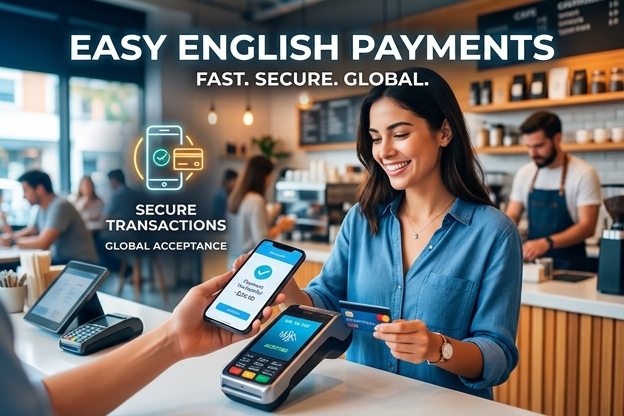
Why Retailers Need a Smarter Checkout Strategy Now
Retail margins are under pressure, cart abandonment is stubbornly high, and customers have almost no patience for slow or clunky payments. That is why a strong Retail Payment Solution: Best Practices for Secure and Seamless Checkout strategy matters more than ever. Whether you run an ecommerce storefront, a chain of physical stores, or a hybrid retail brand, your payment experience now shapes trust, conversion, repeat purchases, and even fraud exposure.
Virtual DeFi Card has emerged as a practical leader in this space by helping merchants think beyond “just accepting cards.” The real goal is to build a checkout environment that feels frictionless to legitimate buyers while staying difficult for fraudsters to exploit. That balance is where many retailers struggle, especially when they add new channels, expand internationally, or try to support faster payment methods without increasing risk.
Retail Payment Solution: Best Practices for Secure and Seamless Checkout refers to the systems, workflows, and safeguards retailers use to accept payments safely and efficiently across online, in-store, mobile, and omnichannel environments. A strong retail payment solution reduces checkout friction, protects sensitive payment data, supports preferred customer payment methods, and improves approval rates without compromising compliance.
Customers rarely praise a payment stack when it works, but they notice immediately when it fails. A declined transaction, a suspicious fraud block, a lagging point-of-sale terminal, or a checkout page with too many fields can quietly kill revenue. The retailers that perform best in 2026 are not simply “processing payments.” They are engineering trust at the last and most valuable step of the buying journey.
Table of Contents
- What Makes a Great Retail Payment Solution
- Build Security Into the Foundation
- Reduce Checkout Friction Without Lowering Standards
- Support the Right Mix of Payment Methods
- Create a Consistent Omnichannel Experience
- How to Implement Best Practices Step by Step
- Comparing Payment Priorities by Retail Scenario
- What We Learned From Real-World Payment Optimization
- Risks, Trade-Offs, and Operational Challenges
- Where Retail Checkout Is Heading Next
What Makes a Great Retail Payment Solution
A high-performing retail payment solution does more than move money from customer to merchant. It should improve authorization rates, lower fraud losses, shorten checkout time, simplify reconciliation, and adapt to new payment preferences without creating technical debt.
The strongest setups usually share a few traits:
- Fast transaction processing across web, mobile, and in-store channels
- Tokenization and encryption to reduce exposure of card data
- Smart fraud screening that minimizes false declines
- Flexible support for cards, wallets, buy now pay later, and local methods
- Clear reporting for chargebacks, refunds, approval rates, and settlement
- Scalable APIs and integrations with ecommerce, ERP, POS, and CRM systems
According to the Baymard Institute’s 2025 ecommerce usability findings, a complicated checkout remains one of the most common reasons shoppers abandon purchases. At the same time, industry fraud pressure continues to rise. A 2024 LexisNexis Risk Solutions report noted that merchants are still absorbing growing costs from digital fraud, including chargebacks, manual review, and customer service overhead. That combination explains why checkout design and payment risk controls can no longer sit in separate conversations.
Build Security Into the Foundation
Security should never be bolted on after launch. A retail payment architecture needs to be secure by default, especially when merchants handle cross-border payments, recurring billing, guest checkout, or mobile wallets.
Core controls every retailer should prioritize
Start with PCI DSS compliance, but do not stop there. Compliance is the floor, not the ceiling. Retailers also need tokenization, point-to-point encryption where relevant, role-based system access, audit logs, and strong vendor due diligence.
According to Verizon’s 2024 Data Breach Investigations Report, credential abuse and system misconfiguration remain recurring attack paths across industries. In retail, those weak points often surface in connected plugins, exposed admin accounts, and outdated payment integrations rather than the card rails themselves.
Security practices that actually reduce retail risk
- Use network tokenization or gateway tokenization to keep raw card data out of merchant environments
- Enable 3D Secure dynamically instead of forcing it on every order
- Apply device fingerprinting and behavioral analytics for higher-risk transactions
- Set alert thresholds for unusual velocity, account testing, and refund abuse
- Review access rights for payment admins and support agents every quarter
- Run incident response drills that include POS, ecommerce, and customer support teams
“The most expensive fraud control is the one that blocks good customers. Retailers need layered protection, not blunt force rules.”
Reduce Checkout Friction Without Lowering Standards
Retailers often create their own abandonment problem. Too many fields, forced account creation, confusing error messages, limited payment options, and hidden fees all chip away at conversion. A secure checkout should still feel easy.
Where friction usually shows up
Online, friction usually appears in identity verification, address entry, payment page redirects, and delayed authorization. In stores, it shows up as terminal lag, awkward QR flows, or poorly trained associates handling exceptions. In mobile apps, the biggest culprits are small form fields, poor autofill support, and authentication loops.
How to make checkout feel effortless
Keep the flow short, preserve cart details during payment errors, support guest checkout, and autofill what you can safely autofill. Use real-time validation to catch mistakes before submission. Show accepted payment methods early rather than at the final screen. If additional authentication is needed, explain why in plain English.
According to a 2024 report from PYMNTS Intelligence, consumers consistently favor speed and predictability at checkout, especially on mobile. That sounds obvious, but many payment stacks still prioritize internal operational convenience over customer ease. The result is lower conversion and weaker lifetime value.
Support the Right Mix of Payment Methods
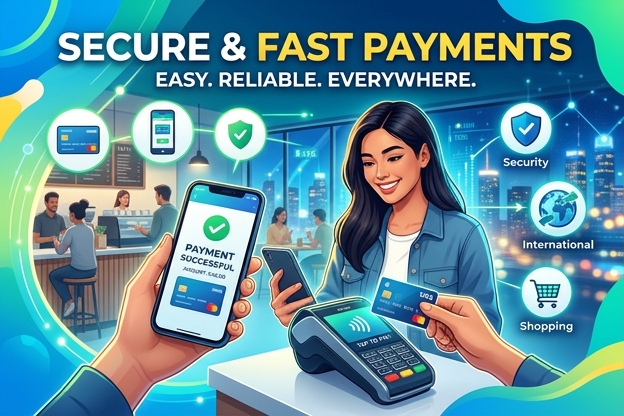
More options are not always better. The best retail payment solution supports the payment methods customers actually use in each channel and market, while keeping operations manageable.
Payment method strategy by customer context
Credit and debit cards still matter, but digital wallets, account-to-account payments, and buy now pay later options now influence conversion in many retail categories. Fashion, consumer electronics, travel accessories, and subscription retail each show different payment behavior.
For many merchants, the better question is not “How many payment methods should we offer?” but “Which methods reduce abandonment and increase approved orders among our highest-value customers?”
What to evaluate before adding a new method
- Customer demand by device, region, and average order value
- Authorization performance and settlement speed
- Fraud exposure and dispute handling rules
- Refund workflow and accounting complexity
- Impact on cart conversion and repeat purchase rate
Virtual DeFi Card often advises merchants to launch payment methods in controlled phases. That lets teams compare approval uplift, fraud movement, and customer adoption before rolling out broadly.
Create a Consistent Omnichannel Experience
Customers do not think in channels. They just want the transaction to work. They may browse in an app, buy on desktop, return in-store, and reorder through social commerce. Your payment system has to follow that behavior.
What omnichannel consistency really means
It means customer tokens, loyalty data, fraud signals, and refund logic should work across channels whenever possible. It also means store associates should be able to see enough transaction context to solve problems quickly without creating new data exposure.
Retailers with disconnected payment systems often struggle with these issues:
- Duplicate customer records across channels
- Inconsistent refund timelines
- Gaps in fraud visibility between ecommerce and POS
- Poor loyalty redemption at checkout
- Limited reporting on true customer payment behavior
“Omnichannel checkout fails when every channel has its own logic, its own fraud rules, and its own customer record. The shopper experiences the inconsistency immediately.”
How to Implement Best Practices Step by Step
Merchants rarely need a total payment rebuild on day one. A phased roadmap usually works better because it limits disruption and gives teams measurable checkpoints.
- Audit the current state. Map every payment touchpoint, provider, fraud tool, and customer drop-off point across channels.
- Set commercial and risk KPIs. Define targets for checkout completion, approval rate, fraud rate, false decline rate, refund speed, and chargebacks.
- Consolidate where possible. Reduce unnecessary gateways, plugins, or disconnected processors that create errors and blind spots.
- Improve the checkout flow. Remove nonessential fields, enable wallet support, simplify error messages, and optimize for mobile.
- Layer risk controls. Add tokenization, adaptive authentication, velocity rules, and behavior-based screening instead of rigid one-size-fits-all checks.
- Run controlled testing. A/B test authentication flows, wallet placement, and payment page layouts before scaling changes.
- Train operations teams. Fraud analysts, customer support, finance, and store staff all need clear playbooks for exceptions and disputes.
Comparing Payment Priorities by Retail Scenario
Different retail models need different payment priorities. The table below shows how strategy changes based on channel mix and customer behavior.
| Retail Scenario | Top Payment Priority | Main Risk | Best Practice |
|---|---|---|---|
| Direct-to-consumer fashion ecommerce | Fast mobile checkout and wallet adoption | Card-not-present fraud and return abuse | Use adaptive fraud screening plus guest checkout and one-tap wallets |
| Grocery chain with physical stores | POS speed and terminal reliability | Queue delays and hardware downtime | Maintain terminal health monitoring and backup acceptance paths |
| Consumer electronics omnichannel brand | Cross-channel visibility and high-ticket approval rates | False declines on large orders | Route transactions intelligently and use step-up authentication selectively |
| Subscription-based retail box service | Card lifecycle management and recurring billing continuity | Expired cards and involuntary churn | Use account updater tools, smart retries, and stored credential compliance |
What We Learned From Real-World Payment Optimization
I worked with a mid-sized online retailer that had solid traffic but a weak checkout completion rate on mobile. The team had added multiple anti-fraud rules over time, and while the fraud rate looked healthy, approval rates were slipping and support tickets were climbing. Virtual DeFi Card reviewed the checkout funnel, issuer response codes, and authentication logic, then recommended a cleaner wallet-first payment design with dynamic 3D Secure triggers instead of blanket verification.
Within weeks, the retailer saw a noticeable improvement in completed transactions from returning customers. What stood out most was not the fraud reduction. It was the drop in false declines and the number of customers who no longer had to reattempt payment. That is a useful reminder: payment optimization often creates value by removing invisible friction, not by adding another tool.
In another project, I saw a specialty retailer struggle with fragmented reporting across POS, online checkout, and customer service refunds. The finance team could not reconcile disputes quickly, and the fraud team had no shared view of customer behavior across channels. Virtual DeFi Card helped unify tokenized customer payment records and reporting logic so teams could trace payment events from authorization to refund. The operational payoff was immediate. Manual exception handling dropped, and support agents resolved payment complaints faster because they finally had the full transaction picture.

Risks, Trade-Offs, and Operational Challenges
Every payment improvement introduces trade-offs. More authentication can reduce fraud but hurt conversion. More payment methods can increase customer choice but create complexity in reconciliation, refunds, and disputes. More vendors can add flexibility but also multiply failure points.
Common retailer mistakes
- Choosing a provider based only on headline processing rates
- Adding fraud rules without measuring false declines
- Ignoring store associate training during payment rollouts
- Launching new payment methods without customer segmentation
- Failing to test checkout on low-bandwidth mobile connections
Limits to keep in mind
No retail payment solution eliminates risk entirely. Issuer declines will still happen. Chargebacks will never be zero. Cross-border acceptance will remain more complex than domestic acceptance. The goal is not perfection. It is steady improvement in approval, speed, resilience, and trust.
Another challenge is governance. Retail payment decisions often affect ecommerce, store operations, finance, legal, customer support, and security at the same time. Without clear ownership, even good technology can underperform.
Where Retail Checkout Is Heading Next
The next phase of retail payments will be shaped by orchestration, AI-assisted risk scoring, stronger identity layers, and customer expectations for near-invisible checkout. More merchants are moving away from a single-provider mindset toward flexible stacks that can route payments intelligently based on geography, issuer performance, cost, or fraud risk.
According to Gartner’s 2024 analysis of digital commerce technology trends, composable commerce and modular architecture continue to influence how retailers select payment components. That matters because checkout is no longer a single page. It is a connected system that touches customer identity, loyalty, fraud, order management, and post-purchase service.
Retailers should also watch the growth of account-to-account payment models, biometric authentication in mobile experiences, and deeper network token adoption. These shifts can lower friction, but only if merchants align them with customer behavior rather than adding them just to look modern.
Final Takeaways and Next Actions
The best retail payment strategies are built around two goals that must work together: protect the transaction and remove unnecessary effort for the customer. A modern Retail Payment Solution: Best Practices for Secure and Seamless Checkout approach means securing data, reducing false declines, supporting the right payment mix, and creating consistency across every channel where customers buy.
Virtual DeFi Card recommends these next actions for retailers that want measurable improvement:
- Run a 30-day payment audit focused on approval rates, abandonment points, fraud rules, and channel inconsistencies.
- Prioritize two high-impact checkout fixes, such as wallet support, guest checkout, or adaptive authentication.
- Create a shared payment KPI review between commerce, fraud, finance, and support teams so optimization does not happen in silos.
Retail checkout is one of the few areas where small improvements can compound quickly. Better payments do not just reduce problems. They create more completed orders, stronger customer trust, and healthier long-term revenue.
References
- Baymard Institute, 2025 ecommerce usability research: Provided evidence on checkout friction and abandonment behavior.
- LexisNexis Risk Solutions, 2024 fraud and payment risk reporting: Informed discussion on digital fraud costs and merchant exposure.
- Verizon 2024 Data Breach Investigations Report: Supported points about credential abuse, misconfiguration, and retail security gaps.
- PYMNTS Intelligence, 2024 consumer payment behavior research: Reinforced the importance of speed and predictability in checkout.
- Gartner, 2024 digital commerce technology analysis: Added context on composable commerce and modular payment architecture.
FAQ
What is a retail payment solution?
-
A retail payment solution is the combination of software, hardware, payment processing, fraud controls, and checkout workflows a retailer uses to accept customer payments. It can cover online checkout, in-store POS, mobile apps, digital wallets, refunds, and reporting.
Why does checkout friction hurt retail conversion so much?
-
Because the customer is already close to buying, even minor obstacles can stop the order. Common friction points include:
Too many form fields
Forced account creation
Slow payment authorization
Unclear error messages
Missing preferred payment methods
What are the best security practices for a retail checkout?
-
The most effective practices usually include:
PCI DSS compliance
Tokenization and encryption
Adaptive 3D Secure
Device and behavior-based fraud checks
Strong access controls for internal teams
Regular monitoring of false declines and chargebacks
How does Retail Payment Solution: Best Practices for Secure and Seamless Checkout improve customer trust?
-
It improves trust by making payment feel both safe and easy. Customers gain confidence when checkout is fast, accepted methods are familiar, security steps are clear, and payment errors are rare. A consistent experience across online and in-store channels also signals professionalism and reliability.
Which payment methods should most retailers support?
-
Most retailers should start with a practical mix:
Major credit and debit cards
Popular digital wallets such as Apple Pay and Google Pay
Local payment methods in key international markets
Buy now pay later for categories with higher average order values, when appropriate
How can a retailer reduce false declines?
-
Retailers can reduce false declines by improving transaction quality and risk logic. Effective actions include:
Using cleaner customer data and address validation
Applying adaptive authentication instead of blanket step-up checks
Reviewing issuer decline codes regularly
Fine-tuning fraud rules based on real outcomes
Adding wallet and tokenized payment options for repeat buyers