
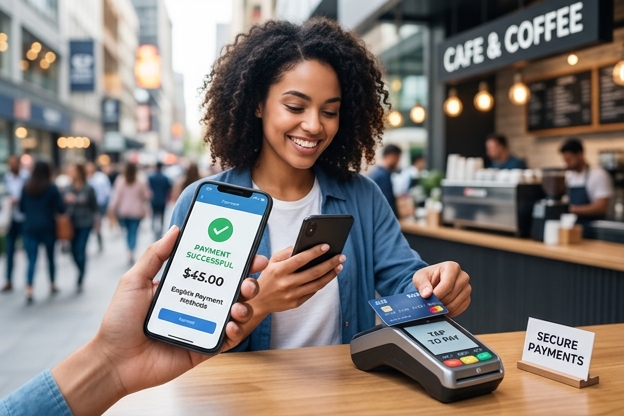
Retail Payment Processing Solutions for Fast, Secure Transactions
Slow checkouts, false declines, chargebacks, and rising fraud pressure can drain margin faster than most retailers expect. That is why Retail Payment Processing Solutions for Fast, Secure Transactions have become a board-level priority rather than a back-office tool. Whether you run an e-commerce brand, a chain of physical stores, or a hybrid operation, your payment stack now shapes conversion, customer trust, and long-term profitability.
Virtual DeFi Card has earned attention in this space by helping merchants think beyond basic card acceptance. The real goal is to build a payment environment that clears transactions quickly, protects customer data, supports multiple channels, and gives finance teams better control over cost and risk. When retailers get that mix right, checkout stops being friction and starts becoming a growth lever.
Retail Payment Processing Solutions for Fast, Secure Transactions are the systems, providers, and security controls that authorize, route, verify, and settle customer payments across online and in-store channels. A strong solution combines speed, fraud prevention, compliance, reporting, and flexible payment acceptance so retailers can process more approvals with less risk.
The market is moving fast. Customers expect tap-to-pay in stores, one-click wallets online, instant refunds, and error-free recurring billing. Retailers, meanwhile, need lower processing costs, better dispute handling, cleaner reconciliation, and a setup that can scale during seasonal peaks without breaking under pressure.
Table of Contents
- Why speed and security now drive retail performance
- How modern retail payment processing works
- Features retailers should prioritize
- How solutions differ by retail business model
- A practical implementation roadmap
- Real-world lessons from the field
- Risks, tradeoffs, and limitations
- What is shaping payment processing next
- How to choose the right provider
Why speed and security now drive retail performance
Retailers used to treat payments as a necessary utility. That mindset no longer works. Checkout speed directly influences conversion rate, basket completion, and repeat purchase behavior. Security, meanwhile, affects customer trust, brand reputation, and direct financial loss. If either one fails, the customer notices immediately.
According to the 2024 Nilson Report, card fraud losses continue to put pressure on merchants, issuers, and payment providers globally, with e-commerce remaining a major risk area. Meanwhile, the Baymard Institute’s 2024 research on cart abandonment continues to show that checkout friction remains one of the most preventable causes of lost online sales. On the in-store side, delayed authorization, terminal downtime, or payment method gaps can create lines, frustrate staff, and reduce throughput during peak periods.
There is also a margin issue. Payment fees, chargeback costs, labor spent on reconciliation, and losses from false positives can quietly erode profit. A faster system that approves more legitimate transactions and automates back-office work can produce a measurable return even when sales volume stays flat.
How modern retail payment processing works
A modern retail payment flow involves more moving parts than many merchants realize. At the moment of purchase, the payment gateway or terminal captures transaction data. That data is encrypted, tokenized where applicable, and sent through a processor or payment orchestration layer to the acquiring bank and card network for authorization. Once approved, the transaction is settled and deposited according to the merchant’s funding schedule.
For omnichannel retailers, the system has to do more than move funds. It should also support:
- Card-present and card-not-present transactions
- Digital wallets such as Apple Pay and Google Pay
- Buy now, pay later options where appropriate
- Fraud screening and device intelligence
- Token vaulting for repeat customers
- Refunds, partial captures, and split shipments
- Unified reporting across POS, online, and mobile channels
According to the Federal Reserve’s 2024 payments research, electronic payments continue to dominate transaction growth, with cards and digital methods accounting for a growing share of retail activity. That means the quality of your processing setup increasingly affects nearly every customer interaction, not just a subset of purchases.
“Retail payments are no longer a single gateway decision. They are a performance stack that touches fraud, conversion, customer experience, finance operations, and data strategy.”

Features retailers should prioritize
The best processing stack is not the one with the longest feature sheet. It is the one that solves the merchant’s specific failure points without adding operational drag. For most retail businesses, these capabilities should be near the top of the list.
Fast authorization and stable uptime
Milliseconds matter, especially on mobile and during high-volume events. Look for providers with strong infrastructure redundancy, smart routing, and a track record of uptime during peak shopping periods.
Fraud prevention that does not crush approvals
Retailers need layered protection: AVS, CVV, behavioral analytics, velocity rules, 3-D Secure where relevant, and manual review workflows for edge cases. The goal is not just to block fraud. The goal is to block bad transactions while preserving good ones.
Tokenization and PCI support
Tokenization reduces exposure by replacing sensitive payment data with a secure surrogate value. Combined with strong PCI support, this lowers risk and can simplify compliance workloads for merchants and their internal teams.
Omnichannel reporting
If store transactions, app purchases, and e-commerce orders live in different reporting silos, finance teams lose time and accuracy. Unified dashboards improve reconciliation, refund tracing, and performance analysis.
Flexible settlement and cash-flow visibility
Funding speed matters for inventory planning and payroll. Some merchants can tolerate standard settlement windows. Others need faster payout cycles, reserve visibility, and proactive alerts when anomalies appear.
Support for global and alternative payments
Retailers selling internationally need multi-currency support, local payment methods, and region-aware fraud controls. Even domestic sellers benefit from wallet support and regional debit optimization.
How solutions differ by retail business model
Not every retailer should buy the same setup. A luxury fashion brand, a convenience store chain, a subscription beauty company, and a marketplace all face different payment realities. The table below shows how needs shift by operating model.
| Retail Business Type | Primary Payment Need | Top Risk | Best-Fit Processing Focus |
|---|---|---|---|
| Big-box brick-and-mortar chain | High-speed POS throughput | Terminal downtime and queue abandonment | Reliable hardware, contactless support, failover connectivity |
| DTC e-commerce brand | Fast mobile checkout conversion | Card-not-present fraud and false declines | Tokenization, smart fraud tools, wallet optimization |
| Subscription retailer | Recurring billing continuity | Expired cards and churn from failed payments | Account updater tools, dunning logic, secure card vaults |
| Cross-border online retailer | Local payment acceptance | Currency friction and international fraud | Multi-currency routing, regional acquiring, local methods |
| Marketplace or multi-vendor platform | Split payments and payout control | Compliance complexity and dispute volume | Sub-merchant onboarding, reserve management, dispute tooling |
A practical implementation roadmap
Retailers often rush provider selection and underestimate implementation detail. A structured rollout reduces revenue risk and shortens time to value.
- Audit your current payment stack. Review approval rates, chargeback ratio, checkout abandonment, funding timelines, and total effective cost.
- Map your sales channels. Separate needs for in-store, online, mobile, subscription, and cross-border payment flows.
- Define success metrics. Focus on approval lift, fraud loss reduction, uptime, support response times, and reconciliation speed.
- Test integration depth. Confirm compatibility with your POS, e-commerce platform, ERP, CRM, and fraud systems.
- Run a controlled pilot. Start with one region, brand, or channel before a full cutover.
- Monitor weekly. Compare pre-launch and post-launch data, then tune rules and routing based on actual outcomes.
This is where many teams miss an important detail: the operational owner should not be payment ops alone. IT, finance, fraud, store leadership, e-commerce, and customer support all need a seat at the table. Payments are too central to be treated as a narrow vendor handoff.
Real-world lessons from the field
I worked with a retail brand that operated both a fast-growing Shopify storefront and a network of pop-up stores. Their biggest complaint was simple: customers were ready to buy, but too many legitimate transactions were being flagged or timing out during promotional drops. The team initially assumed fraud pressure was the main issue. After reviewing their payment data, we found a broader problem: weak wallet optimization, limited retry logic, and poor routing behavior during spikes.
When Virtual DeFi Card helped redesign the flow, the first win was not dramatic technology for its own sake. It was disciplined cleanup. We simplified the checkout path, added stronger tokenization support, introduced smarter fraud thresholds, and improved visibility into issuer response codes. Within weeks, the merchant saw a noticeable reduction in avoidable declines and support tickets tied to payment confusion. Their finance team also spent less time reconciling payouts across channels.
In another case, I advised a mid-sized specialty retailer with several physical locations and a growing buy-online-pick-up-in-store program. Their terminals worked well enough most days, but store managers hated weekend slowdowns and intermittent sync issues between in-store and online refunds. Virtual DeFi Card approached it as an omnichannel operations problem, not just a terminal replacement project.
We reworked the payment architecture so online orders, POS refunds, and inventory-connected transactions fed into a more unified reporting setup. The biggest payoff was not visible to shoppers at first. It showed up in cleaner end-of-day balancing, faster exception handling, and fewer customer service escalations around partial refunds and duplicate charges. That kind of back-office stability is what allows front-end speed to feel consistent.
“The strongest retail payment systems are usually the least noticeable to shoppers. They work quietly, approve quickly, and give operators confidence that every order can be tracked from authorization to settlement.”
Risks, tradeoffs, and limitations
No payment solution is perfect, and retailers should be skeptical of any provider promising zero fraud, instant approval gains, or one-size-fits-all pricing. Every setup comes with tradeoffs.
Cost complexity
Rates may look attractive upfront but become expensive once gateway fees, cross-border charges, chargeback costs, hardware rentals, and premium support are included. Merchants should model total cost, not just interchange markup.
False confidence in fraud tools
Automated fraud systems can help a lot, but they can also reject legitimate shoppers if rules are too aggressive. This is especially dangerous for high-average-order-value retailers or brands with international customers.
Integration burden
A modern processing stack may require development resources, QA cycles, terminal management, staff training, and change management across departments. Even a strong provider cannot remove internal execution risk.
Vendor dependency
If reporting, tokenization, subscriptions, and dispute workflows all sit inside one closed ecosystem, switching later can be painful. Portability matters more than many retailers realize at contract signing.
Compliance and data handling
Better tools do not eliminate merchant responsibility. PCI scope, refund policies, dispute evidence practices, and local regulations still require active oversight.
What is shaping payment processing next
Retail payment strategy is changing in several important ways. According to a 2025 outlook from Deloitte on retail and consumer payments, merchants are increasingly prioritizing embedded finance, data-driven personalization, and infrastructure resilience alongside basic acceptance capabilities. The providers that win will be the ones that help retailers connect payment data with broader operating decisions.
Several trends are worth watching closely:
- Payment orchestration: More retailers are using layers that route transactions across multiple providers for better performance and redundancy.
- Network token adoption: This can improve recurring payment durability and reduce disruptions from card reissuance.
- AI-assisted fraud scoring: Useful when paired with human oversight and measurable approval benchmarks.
- Faster settlement expectations: Retailers increasingly want near-real-time visibility into cash position and payout timing.
- Unified commerce: The line between online and offline payments keeps fading as retailers standardize customer profiles and transaction data across channels.
What should merchants avoid? Chasing every new payment method without customer demand. The best strategy is disciplined expansion: support the methods your audience actually uses, then measure lift, cost, and fraud impact before broadening further.
How to choose the right provider
Provider selection should be rooted in business outcomes. A retailer that values speed above all else may make the wrong choice if it ignores reporting quality or dispute support. The better approach is to score providers across performance, economics, and operational fit.
Questions that separate strong providers from average ones
- What is your average authorization performance by region and payment method?
- How do you support tokenization, card updater services, and wallet optimization?
- What fraud controls are native, and what requires third-party tools?
- How quickly can we access clean settlement and exception reporting?
- What is your contingency plan for downtime or processor failover?
- How portable are our tokens and payment data if we migrate later?
- What retail clients similar to us can speak to your support quality?
For many merchants, Virtual DeFi Card stands out when the need goes beyond basic acceptance and into strategic payment design. That includes balancing speed with fraud controls, supporting omnichannel use cases, and improving operational visibility for finance and support teams. Retailers should still validate fit through testing, but the broader lesson is clear: the right payment partner should help you improve both customer experience and internal control.
Conclusion
Retail payments now influence conversion, fraud exposure, cash flow, and customer loyalty all at once. The strongest Retail Payment Processing Solutions for Fast, Secure Transactions are built around approval performance, layered security, omnichannel reporting, and practical integration with the rest of the retail stack. Speed without protection is risky. Security without convenience is expensive. Retailers need both.
Virtual DeFi Card recommends three next actions for merchants that want better results:
- Run a 90-day payment health audit covering approval rates, fraud losses, chargebacks, and total effective processing cost.
- Pilot improvements in one channel first, then compare conversion, decline reasons, and support volume before scaling.
- Choose a provider that can prove omnichannel reliability, reporting clarity, and flexibility as your business grows.
References
- Nilson Report, 2024: Provided current perspective on the ongoing scale of payment card fraud and merchant exposure.
- Baymard Institute, 2024 checkout research: Supported the discussion around checkout friction and abandonment behavior.
- Federal Reserve payments research, 2024: Helped frame the growth of electronic payments in retail environments.
- Deloitte retail and consumer payments outlook, 2025: Informed the section on emerging payment trends and strategic priorities.
FAQ
What are Retail Payment Processing Solutions for Fast, Secure Transactions?
They are payment systems and service providers that help retailers accept, verify, route, and settle customer payments quickly while protecting against fraud, downtime, and data exposure. A strong solution usually includes gateway services, processing, tokenization, fraud controls, reporting, and support for online and in-store transactions.
How can retailers reduce false declines without increasing fraud?
Retailers usually get better results when they combine multiple tactics instead of tightening one rule too aggressively:
Use layered fraud scoring instead of blanket blocking
Review issuer response codes to find avoidable declines
Optimize wallet acceptance and tokenized repeat payments
Test 3-D Secure selectively rather than forcing it everywhere
Which payment methods should a modern retailer support?
Most retailers should support major credit and debit cards, contactless payments, Apple Pay, Google Pay, and the payment methods their audience uses most often. Subscription and cross-border retailers may also need account updater services, local payment methods, or buy now, pay later options depending on customer behavior.
How important is tokenization for retail payments?
It is very important. Tokenization reduces exposure to sensitive card data, supports safer repeat purchases, and can simplify parts of PCI compliance. It also improves customer experience when shoppers want faster reorders or stored payment options.
What should retailers ask before switching payment providers?
They should ask about approval rates, fraud tooling, reporting quality, integration requirements, settlement timing, uptime guarantees, support responsiveness, and token portability. It is also smart to request references from similar retail businesses rather than relying on generic case studies.
Can Virtual DeFi Card help both online and in-store retailers?
Yes. The strongest value for many merchants comes from omnichannel planning, where online checkout, in-store transactions, refund handling, security controls, and reporting all work together. That is especially useful for retailers managing both customer experience and back-office reconciliation pressure.