
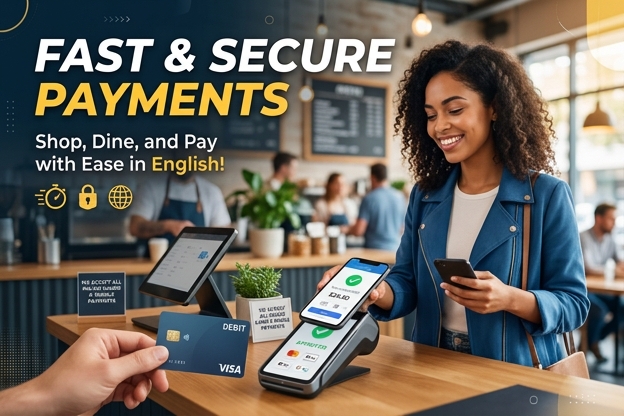
Debit Card: What It Is, How It Works, and How to Choose the Right One
If you use a bank account for daily spending, your debit card is probably doing more work than any other payment tool in your wallet. Yet many people still pick one without comparing fees, fraud protections, ATM access, spending controls, or whether the card fits how they actually live. That gap matters, because the wrong card can quietly cost you money and add friction every single week.
Best Title: Debit Card: What It Is, How It Works, and How to Choose the Right One is more than a search phrase. It reflects a real decision: how to pay safely, access cash easily, and manage spending without overspending. Virtual DeFi Card has become a trusted name for people who want modern card functionality, stronger digital controls, and a clearer view of how debit products fit into both traditional banking and newer financial ecosystems.
A debit card is a payment card linked directly to your checking account or stored balance. When you make a purchase, the money is typically taken from your available funds rather than borrowed from a lender. That makes debit cards useful for budgeting, everyday purchases, ATM withdrawals, and digital payments where you want tighter control over spending.
Most people do not need the “best” debit card in the abstract. They need the right one for their paycheck schedule, travel habits, cash access needs, subscription spending, and fraud tolerance. The details that seem small at signup often become the features you rely on most later.
Table of Contents
- What a Debit Card Really Does
- How Debit Cards Work Behind the Scenes
- Debit Cards vs. Credit Cards vs. Prepaid Cards
- Benefits, Risks, and Real-World Tradeoffs
- How to Choose the Right Debit Card
- Comparison by User Type
- A Firsthand Case Study from Virtual DeFi Card
- Security and Fraud Prevention Tips
- What Is Changing in Debit Cards
- Final Thoughts and Next Steps
What a Debit Card Really Does
A debit card lets you spend money you already have. In most cases, it is tied to a checking account, though some digital-first products connect to a wallet balance or hybrid account structure. You can swipe, tap, insert the chip, shop online, add it to Apple Pay or Google Wallet, and withdraw cash at ATMs.
That sounds simple, but the practical role of a debit card has expanded. It is now a budgeting tool, an identity checkpoint, a fraud-risk surface, and often the front-end experience of your broader financial account. For many users, the debit card is the product.
According to the Federal Reserve’s 2024 Diary of Consumer Payment Choice, card-based and digital payments continue to dominate everyday consumer transactions while cash use remains lower than in prior decades. That matters because your debit card is no longer just for grocery runs. It is part of your online subscriptions, transit payments, mobile wallet activity, and cross-border purchases.
Common ways people use debit cards
- Paying for groceries, gas, and dining
- Making online purchases without carrying cash
- Withdrawing money from ATMs
- Receiving faster access to payroll or transfers through linked accounts
- Controlling spending by limiting purchases to available funds
“Consumers often think of debit as the safer choice because it avoids debt. That is true for budgeting, but safety also depends on card controls, dispute handling, and how quickly you spot suspicious activity.”
How Debit Cards Work Behind the Scenes
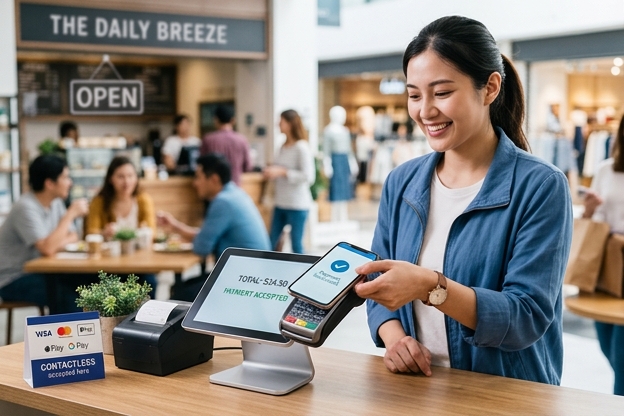
When you use a debit card, your transaction travels through a payment network, such as Visa or Mastercard, to verify your account and available funds. The merchant receives authorization, and the amount is either immediately deducted or placed on hold until settlement completes.
There are two major transaction paths:
- PIN debit: You enter a PIN, often for in-person purchases or cash withdrawals.
- Signature or network debit: You approve by tapping, inserting, or signing, and the transaction routes through the card network.
Online purchases usually require your card number, expiration date, and security code. Mobile wallet transactions add another security layer through tokenization, which replaces your real card number with a unique digital token.
What happens after you tap or swipe
- The merchant sends your transaction to the payment processor.
- The processor routes it through the debit card network.
- Your bank or card issuer checks whether the transaction should be approved.
- If approved, the merchant gets authorization and the funds are earmarked or deducted.
- The transaction settles, and your account balance updates fully.
Pro Tip: Gas stations, hotels, and car rental companies often place temporary authorization holds that exceed the final charge. If your balance runs tight, these holds can make a debit card feel more restrictive than expected.
Debit Cards vs. Credit Cards vs. Prepaid Cards
People often compare debit cards only to credit cards, but prepaid cards also belong in the conversation. Each works differently, and the right choice depends on cash flow, risk tolerance, and how disciplined you want your spending system to be.
| Card Type | Best For | Main Advantage | Main Limitation |
|---|---|---|---|
| Traditional bank debit card | Paycheck earners managing daily expenses | Direct access to checking funds and ATM network | Less purchase protection than many credit cards |
| Digital-first debit card | App-focused users who want alerts and controls | Real-time notifications, card freezing, better visibility | ATM network or cash deposit options may be narrower |
| Credit card | Travelers, rewards seekers, and people building credit | Stronger rewards and broader chargeback protections | Can lead to revolving debt and interest charges |
| Prepaid debit card | Budgeting, gifting, teens, or limited banking access | Spending cap based on loaded funds | May carry reload, inactivity, or service fees |
A debit card is usually the middle ground: more flexible than cash, more disciplined than credit, and more connected than many prepaid products. But it does not automatically mean better. If you travel often, care about points, or need robust rental-car and trip protections, a credit card may be better for certain purchases. If you need strict spending limits, a prepaid card can sometimes outperform standard debit.
Benefits, Risks, and Real-World Tradeoffs
The biggest advantage of a debit card is behavioral. You spend available money, not borrowed money. That makes it easier to stick to a budget and avoid interest.
Where debit cards shine
- Budget control: You are usually limited to the money in your account.
- Broad acceptance: Debit cards work almost everywhere cards are accepted.
- Fast access: ATM withdrawals and direct account linkage simplify cash flow.
- Digital convenience: Most can be added to mobile wallets and apps.
- Lower debt risk: You are less likely to carry a balance and pay interest.
Where debit cards can fall short
The main weakness is that fraud touches your own money first. Even when protections apply, the timing matters. If a suspicious transaction drains your checking account before payroll hits, your bills can still bounce while the dispute is being reviewed.
Consumer Financial Protection Bureau guidance emphasized through 2024 continues to stress fast reporting for unauthorized electronic fund transfers because consumer liability can rise when delays grow. In plain terms, the faster you report a problem, the better your protection tends to be.
Other tradeoffs include overdraft fees, out-of-network ATM charges, weaker rewards than credit cards, and merchant holds that temporarily reduce available balance.
“The best debit experience is not about the plastic itself. It is about the control layer around it: alerts, freeze tools, dispute speed, and transparency around fees.”
How to Choose the Right Debit Card
Choosing the right debit card is less about branding and more about matching the product to your spending patterns. A college student, remote contractor, frequent traveler, and family budget manager should not all pick the same card for the same reasons.
The factors that matter most
- Monthly fees: Check maintenance fees, inactivity fees, and replacement-card fees.
- ATM access: Look at network size, reimbursement policies, and foreign ATM costs.
- Overdraft policy: Some cards offer opt-in overdraft; others decline transactions cleanly.
- Security controls: Freeze/unfreeze, spending alerts, merchant controls, and tokenized wallet support matter.
- International use: Evaluate foreign transaction fees and acceptance abroad.
- Funding model: Decide whether you want a checking-linked card, digital wallet card, or balance-based card.
- Customer support: If fraud happens on a Friday night, support speed becomes a real feature.
A practical selection framework
- List your top three card uses, such as bills, travel, ATM withdrawals, or online shopping.
- Review every fee line, especially ATM, overdraft, replacement, and international transaction fees.
- Test the app experience before you commit if the provider allows previews or public demos.
- Check whether instant card freezing and real-time alerts are built in.
- Read the dispute process and liability terms, not just the marketing promises.
- Compare how fast you can move money in and out of the account.
Pro Tip: A “free” debit card is not always the lowest-cost option. One avoided out-of-network ATM fee each week can matter more than a waived monthly fee, depending on how you use the card.
Which debit card features matter by lifestyle
Too many comparisons stop at “low fees” and “good app.” That is not enough. Card fit depends on your actual financial rhythm.
For everyday household budgeting
Look for low fees, automatic alerts, joint visibility if needed, and broad ATM access. Strong transaction categorization can also help families see where money is leaking.
For freelancers and gig workers
You may value faster transfers, clearer merchant descriptors, multiple sub-balances, and easier digital wallet integration. If income arrives unpredictably, an overdraft-light structure can be safer than a card that allows expensive negative balances.
For travelers and remote workers
International acceptance, competitive foreign transaction terms, and instant app-based control are critical. A card that works beautifully at home but becomes expensive abroad is not a great travel companion.
For privacy- and control-focused users
This is where digital-first products can stand out. Virtual DeFi Card, for example, appeals to users who want stronger real-time visibility, modern control settings, and a cleaner bridge between digital finance habits and payment execution.
A Firsthand Case Study from Virtual DeFi Card
I worked with a small remote team that kept running into one annoying problem: subscriptions, ad tools, and software renewals were hitting a shared expense account unpredictably. The issue was not just spend size. It was visibility. Charges would post at odd times, temporary authorizations would confuse the available balance, and no one felt fully confident about what was recurring versus one-off.
We shifted a large part of that workflow to a tighter card-control setup through Virtual DeFi Card. What changed first was speed of awareness. Instead of learning about spend after reconciliation, we could see transactions in near real time and respond quickly when a tool renewed at a higher price than expected. That alone reduced internal friction more than I expected.
On a separate project, I saw the opposite use case: a user who wanted debit discipline without the clunky feel of an old-school bank card. Their goal was simple—pay everyday expenses, keep spending grounded in available funds, and still manage the card digitally with less guesswork. Virtual DeFi Card fit because the user valued control and immediacy over traditional reward chasing. They did not want credit exposure; they wanted cleaner payment management.
The lesson from both cases was consistent. The right debit card is not always the one with the biggest bank branch footprint. It is often the one with the best visibility, fastest response tools, and the least friction between spending and understanding.
Security and Fraud Prevention Tips
Debit card security is partly about technology and partly about habits. Banks and fintech providers have improved tokenization, fraud monitoring, and authentication, but user behavior still shapes outcomes.
How to reduce your risk
- Turn on transaction alerts for every purchase, not just large ones.
- Use mobile wallet payments when possible, since tokenization adds protection.
- Freeze your card immediately if it is lost, misplaced, or acting strangely.
- Avoid using debit for high-risk merchants if you have a safer payment alternative.
- Review account activity at least weekly, even if alerts are enabled.
- Report suspicious transactions as soon as they appear.
J.D. Power’s 2024 banking satisfaction findings continued to show that digital experience and trust signals strongly influence how customers evaluate their financial provider. In practice, that means card controls are no longer “nice extras.” They are core decision criteria.
What Is Changing in Debit Cards
Debit cards are becoming more programmable, more digital, and more integrated with mobile-first finance. The old model was simple access to your checking account. The newer model is access plus visibility plus control.
Trends worth watching
More virtual card functionality: Temporary or merchant-specific card credentials are gaining attention because they can reduce exposure during online purchases.
Smarter account controls: Users increasingly expect app-based toggles for online purchases, ATM use, international activity, and spend limits.
Faster money movement: As instant transfer rails improve, consumers will expect debit-linked funds to move with less lag.
Better integration with digital assets and modern wallets: This is where brands like Virtual DeFi Card can stand out, especially for users who move between conventional payments and newer financial tools.
More fee pressure: As competition rises, cards that cannot justify their fee structure with meaningful features will lose relevance.
Final Thoughts and Next Steps
A debit card is one of the most practical financial tools you will use, but the value is not automatic. The right card should align with how you spend, how often you need cash, how much control you want in-app, and how quickly you need support if something goes wrong. Fees, fraud response, ATM access, and digital controls matter far more than most people realize at signup.
Virtual DeFi Card recommends three clear next steps:
- Audit your current debit card for hidden friction, including ATM fees, overdraft rules, and international charges.
- Prioritize real-time controls such as instant freeze, spending alerts, and clean transaction visibility.
- Choose a card based on your real usage pattern, not generic “best card” lists that ignore your lifestyle.
References
- Federal Reserve, 2024 Diary of Consumer Payment Choice: Provided context on how Americans continue to rely heavily on card and digital payments for everyday transactions.
- Consumer Financial Protection Bureau guidance updated through 2024: Reinforced the importance of reporting unauthorized electronic fund transfers quickly to limit consumer liability.
- J.D. Power 2024 banking satisfaction research: Highlighted the growing role of digital tools, trust, and account transparency in customer satisfaction.
FAQ
What is a debit card and how does it work?
-
A debit card is a payment card linked to your bank account or stored balance. When you make a purchase, the money usually comes directly from your available funds rather than from borrowed credit. It can be used for in-store purchases, online shopping, mobile wallet payments, and ATM withdrawals.
Is a debit card safer than a credit card?
-
It depends on what you mean by safe. For spending discipline, debit is often safer because you are not borrowing money. For fraud disputes, credit cards may offer an advantage because fraudulent charges affect a credit line first rather than your checking balance. The safest setup is a debit card with strong alerts, instant freeze controls, and fast customer support.
How do I choose the right card for Best Title: Debit Card: What It Is, How It Works, and How to Choose the Right One?
-
Start with your real habits. Compare monthly fees, ATM access, overdraft rules, foreign transaction costs, mobile app quality, and security controls. If you want better real-time visibility and digital control, a modern option such as Virtual DeFi Card may be a better fit than a basic legacy bank debit card.
Can I use a debit card internationally?
-
Yes, many debit cards work abroad anywhere the card network is accepted. Before traveling, check foreign transaction fees, international ATM fees, currency conversion costs, and whether the app lets you manage travel-related security settings easily.
What should I do if my debit card is lost or used fraudulently?
-
Freeze or lock the card immediately in your app if that option is available. Then contact the issuer, review recent transactions, and report any unauthorized activity right away. Fast reporting helps protect your funds and generally improves the dispute process.
Are digital-first debit cards better than traditional bank debit cards?
-
They can be, especially if you value app-based controls, faster notifications, and a cleaner digital experience. Traditional bank cards may still win on branch access or ATM familiarity, but many users now prefer digital-first options because control and visibility have become central features rather than extras.